History of the University
Over our more than 150-year history, the U of A has continued to bring the citizens of the state together by raising educational standards, advancing research, improving the economy and giving Arkansans a mascot to rally around.
Our Founding & Early Years
From our humble beginnings on a remote hilltop in the Ozarks, the U of A experienced several decades of rapid growth and change. This was the period when we laid the cornerstones of both buildings and traditions.
The Arkansas state legislature approved the establishment of a land-grant university, to be known as the Arkansas Industrial University.
Classes began, with seven boys and one girl in attendance, taught by three faculty. Within two weeks, a Black student from Woodruff County had also enrolled, and by the end of the semester more than 100 students had sought admission.
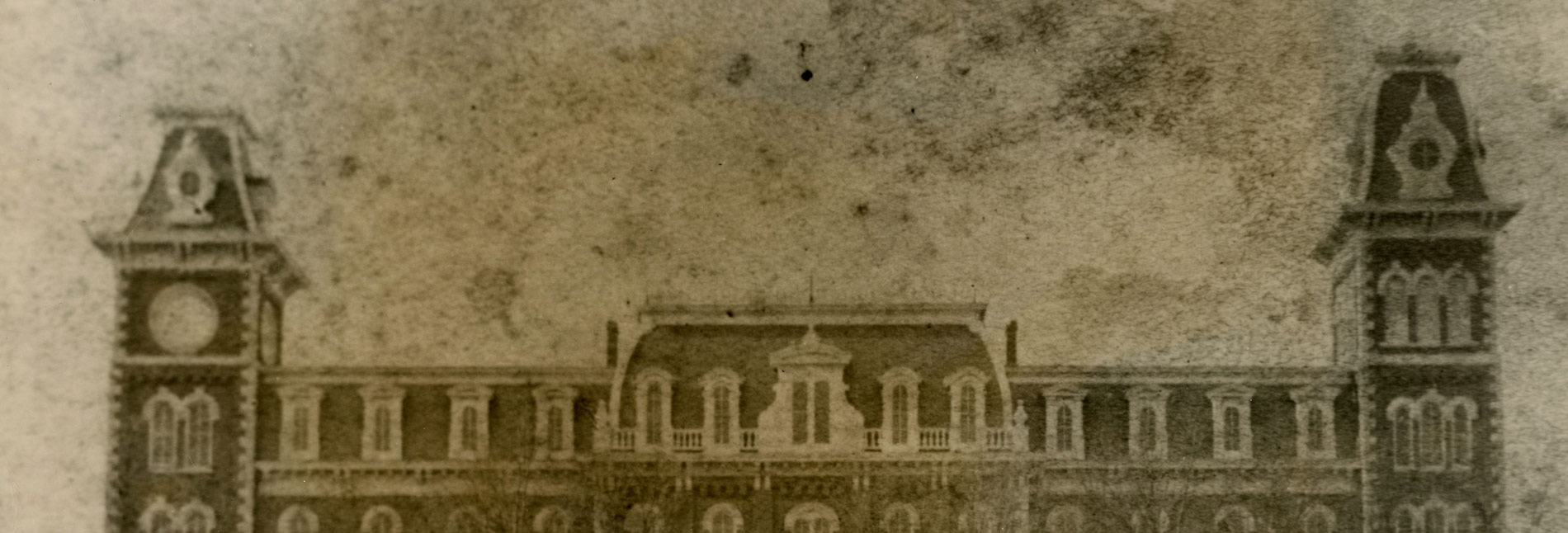
The building now known as Old Main, based on a University of Illinois building designed by architect John Van Osdel, was dedicated with a picnic and fireworks display on the lawn. At the time, it was the largest building in the state.
The first students graduated from the Arkansas Industrial University.
The Arkansas Agricultural Experiment Station was established by the state legislature to conduct research and inform the public about the benefits of scientific agriculture.
Chi Omega, the largest collegiate sorority in the United States, was founded at the U of A.
Students published the first yearbook, named the Cardinal, after the U of A’s school color. Its name was changed to the Razorback in 1915
The Arkansas Industrial University was renamed the University of Arkansas.
The University Weekly, later renamed The Arkansas Traveler, began publication as the university's first student-produced newspaper.
The university’s football team’s mascot was officially changed to the Razorbacks. Sportswriters and students had begun referring to the team as the “razor-backs” as early as 1905, and coach Hugo Bezdek popularized the name in 1909, reportedly saying after the LSU game that his team had “played like a wild band of razorbacks.”
The Roll of Honor Plaque was dedicated, honoring the men and women from the U of A who sacrificed their lives during World War I.
Growth & Progress
The U of A, like the rest of the country, went through some major changes following World War I.
Twenty-one years after the U of A claimed its first Rhodes Scholar, J. William Fulbright won a Rhodes Scholarship to attend Oxford University, an experience that led him to propose an international education exchange when he was a member of Congress.
The Chi Omega Greek Theatre was dedicated, with members of the sorority’s chapters from across the country in attendance.
Silas Hunt, a World War II veteran, enrolled at the U of A School of Law, thus becoming the first African American student to break the color barrier in the South, the first tangible expression of desegregation.
The newly built Fine Arts Center hosted its first theatrical performance showing Acres of Sky. Designed by the renowned architect Edward Durell Stone, the Fine Arts Center was the first academic building in the nation to combine the arts within a single connected building, from theatre, dance and music to art and architecture.
The U of A became the first land-grant institution in the nation to send an agricultural foreign mission. University professors worked with colleagues in Panama to develop an extension service.
Maxine Sutton, Billie Rose Whitfield and Marjorie Wilkins were the first African American students admitted for undergraduate study since the end of Reconstruction. The university required them to live in a separate house from white students.
The Razorback football team was undefeated and declared the national football champion by the Football Writers Association of America.
At the same time civil rights marches were occurring across the country, roughly 70 members of Black Americans for Democracy and the Southern Student Organizing Committee staged a blockade of the Traveler offices in Hill Hall, protesting for more inclusion of Black voices in the student paper.
Ruth Cohoon became the first director of the women’s intercollegiate athletics, which fielded teams in archery, cross country, golf, gymnastics, swimming, volleyball, tennis, and track and field.
Hillary Rodham served as the first director of the School of Law’s Legal Aid Clinic. The clinic was founded to give students hands-on skills training by representing real clients in real-life legal situations, and to provide a much-needed service to the Northwest Arkansas community.
Alumni, faculty and administrators completed a successful fundraising campaign to renovate Old Main, which reopened its doors to students in 1991, hosting its first classes in a decade and becoming home to the offices of the Fulbright College of Arts and Sciences.
Arkansas Gov. Bill Clinton, in one of his last campaign stops for president, spoke to a crowd of nearly 10,000 on the front lawn of Old Main. Clinton also played saxophone with the Razorback Band during that visit.
Coach Nolan Richardson led the men’s basketball team to its first national championship.
Where We Are, Where We’re Going
With the turning of the new millennium, the U of A continues to be at the forefront of innovation – while keeping our land-grant mission in mind; to serve the state of Arkansas as a partner, resource and catalyst.
The Walton Family Charitable Support Foundation gave $300 million to the university, the largest single gift to an American institution of higher education at the time. That gift has transformed the university, creating an Honors College and endowing the Graduate School.
The historic district of campus, which is bordered by Garland Avenue, Maple Street, Arkansas Avenue and Dickson Street and contains buildings dating to 1875, was named to the National Register of Historic Places.
An unprecedented $120 million gift from the Walton Family Charitable Support Foundation established the School of Art. This gift – the largest ever given to a U.S. university to a school of art – created the first and only accredited collegiate school of art in the state of Arkansas.
The university closed campus mid-semester due to the COVID-19 pandemic, with professors shifting courses to online classes and students being sent home for the end of the semester and summer.
U of A physicists developed a circuit capable of capturing graphene's thermal motion and converting it into an electrical current that is clean and limitless. Professor Paul Thibado led the research and has continued the work, creating a novel nonlinear circuit to harvest the energy in 2023.
Provost Charles Robinson was appointed chancellor of the U of A after serving as interim chancellor for 14 months. He is the seventh chancellor in the university’s history and first African –American administrator to hold the position.
Both the men’s and women’s track teams win the national championships in the indoor track and field division, the first time the Razorbacks have swept an NCAA championship. The women’s program swept the NCAA Championships in 2024, upping the combined total of national championships in track and field to 51.
Did You Know?
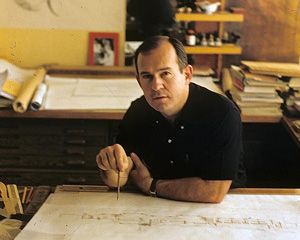
Professor E. Fay Jones (1921-2004) achieved international fame for design, received the American Institute of Architects Gold Medal, and his masterwork, Thorncrown Chapel, was ranked as the fourth best building by an American architect in the 20th century.
Historical Markers
Explore "Where it Happened"
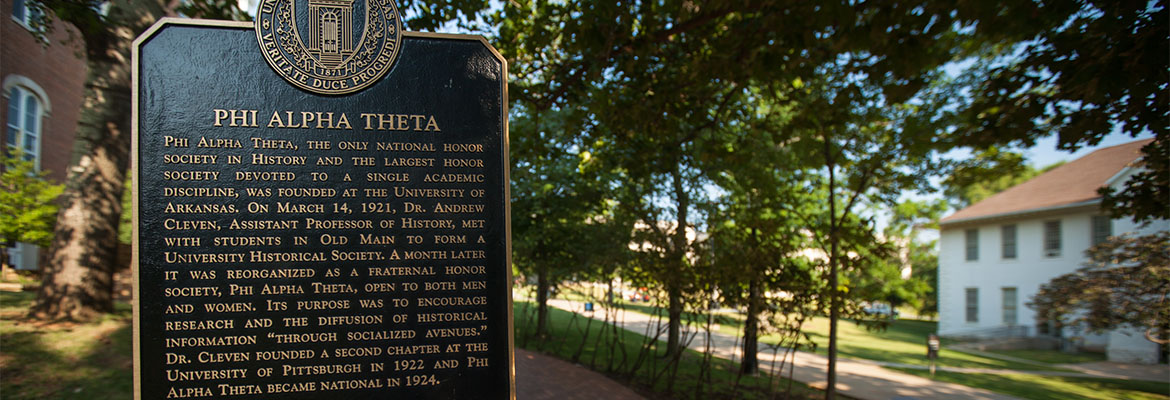
Discover the U of A’s many points of pride with the historical markers found throughout campus. Each is designed to commemorate significant research achievements, notable leaders, outstanding alumni, historic events, sites and campus lore. Find one near you.